
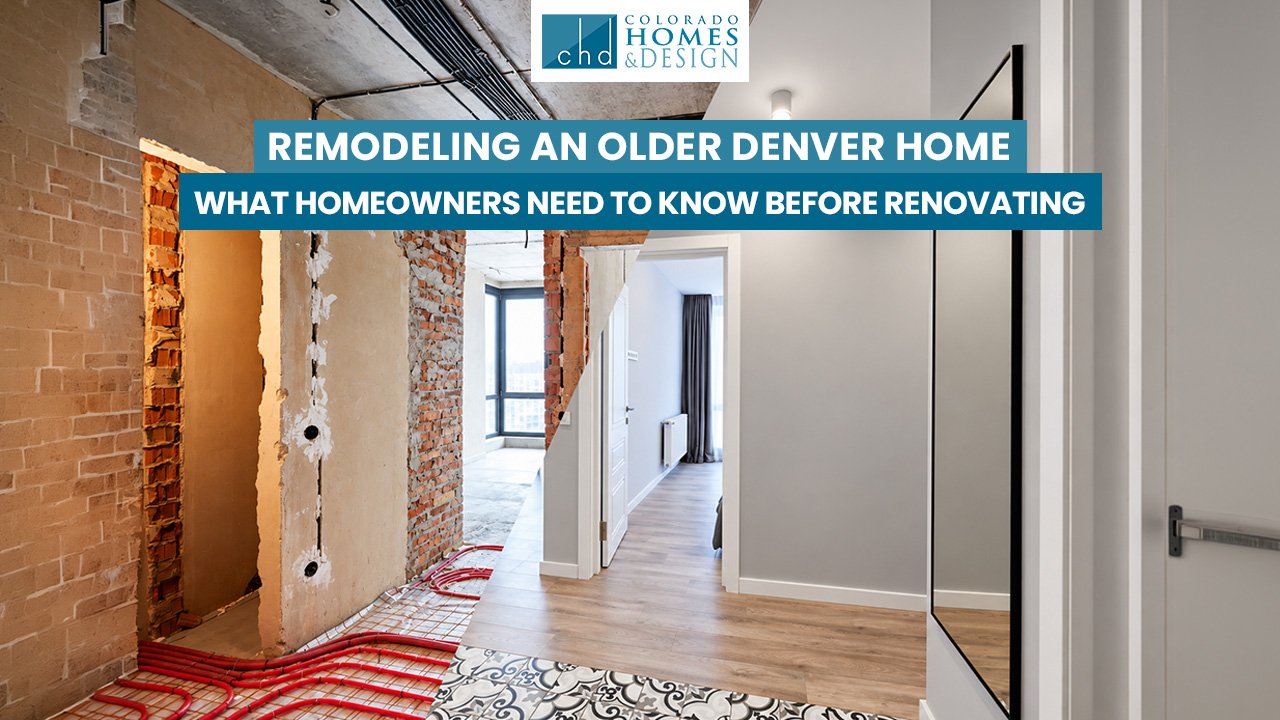
Quick Answer: Older Denver homes — bungalows, Victorians, and mid-century builds — often need updates to electrical, plumbing, and framing that aren’t visible until walls are opened, which can affect both budget and timeline. Planning for a 15–20% contingency, budgeting for potential code upgrades, and working with a contractor experienced in older Denver housing stock are the most effective ways to avoid mid-project surprises.
Denver’s neighborhoods are full of character-rich older homes: brick bungalows in Berkeley and Sunnyside, Victorians near Capitol Hill and Baker, mid-century ranches throughout southeast Denver. That character is part of what makes these homes worth remodeling — but it also means the systems behind the walls often haven’t been touched in decades.
Why Older Homes Cost More to Remodel Than Newer Ones
A remodel in a 1990s or 2000s suburban home often proceeds close to the original estimate, because the electrical, plumbing, and structural systems are relatively current. In an older home, the same project can uncover:
- Outdated electrical panels that can’t support modern appliance loads and need upgrading before new circuits can be added
- Galvanized or cast iron plumbing that’s original to the home and prone to corrosion, requiring replacement rather than simple tie-ins
- Balloon framing or uneven framing common in early-1900s construction, which can complicate everything from cabinet installation to structural changes
- Knob-and-tube wiring still present in some pre-1950s Denver homes, which typically must be replaced to meet current code and insurance requirements
- Lath-and-plaster walls instead of drywall, which behave differently during demolition and repair
What Era Is Your Denver Home? What to Expect by Decade
Pre-1920s (Victorians, early bungalows). Often have the most extensive hidden issues: original wiring, plumbing, and sometimes structural settling. Full renovations frequently include electrical panel upgrades and plumbing replacement as part of the scope.
1920s–1940s bungalows. A hallmark of Denver neighborhoods like Berkeley, Sunnyside, and Washington Park. Many still have original electrical and plumbing that need updating, along with smaller original room footprints that homeowners often want to open up.
1950s–1960s mid-century ranches. Common throughout southeast and southwest Denver. These homes frequently have good bones but benefit from wall removals to create the open-concept layouts many buyers want today.
1970s–1990s suburban builds. Generally have more current systems, though finishes are often dated. These remodels tend to be more predictable in cost and timeline than older homes.
How to Budget for the Unknown
Because so much of an older home’s condition is hidden until demolition, experienced contractors typically recommend:
- A 15–20% contingency fund, set aside specifically for issues found once walls, floors, or ceilings are opened
- A pre-remodel inspection or scope walkthrough focused specifically on electrical panel capacity, visible plumbing material, and any signs of past water damage
- Prioritizing what’s behind the walls over finishes, since plumbing and electrical problems only get more expensive to fix the longer they’re ignored
Permits and Code Upgrades in Older Homes
Older homes are sometimes “grandfathered” under older code as long as no major renovation occurs — but once a permitted remodel begins, inspectors will often require certain systems to be brought up to current code. This commonly includes:
- Electrical panel capacity and grounding
- Smoke and carbon monoxide detector placement
- Egress requirements if a basement or attic space is being converted to living space
- GFCI/AFCI protection in kitchens, bathrooms, and other required areas
This isn’t a way for the city to add cost to your project — it’s a safety requirement, and it’s far better to plan for it in your budget than to be surprised by it mid-construction.
The Upside: Why Older Denver Homes Are Worth the Investment
Older homes typically offer larger lots, more distinctive architectural character, and locations in Denver’s most established, walkable neighborhoods — advantages that are difficult or impossible to replicate in newer construction. A well-planned remodel that respects the home’s original character while updating its systems and layout often results in a home that’s both more valuable and more livable than either an untouched original or an over-modernized version that erases what made it special.
Frequently Asked Questions
Q: Why do older homes cost more to remodel in Denver? A: Older homes frequently have outdated electrical, plumbing, and framing that need to be brought up to current standards once walls are opened — work that isn’t visible or estimable before demolition begins.
Q: Do I have to update my whole electrical panel during a remodel? A: Not always, but if your remodel adds significant new electrical load (new appliances, additional circuits) and your existing panel doesn’t have capacity, an upgrade is often required to pass inspection and safely support the new work.
Q: Is it worth remodeling an old bungalow instead of buying new construction? A: For many Denver buyers, yes — older bungalows offer character, established neighborhoods, and lot sizes that are difficult to find in new construction, and a well-executed remodel can modernize the systems and layout while preserving what makes the home distinctive.
Q: How do I know if my home has knob-and-tube wiring or galvanized plumbing? A: An experienced contractor or inspector can often identify these during an initial walkthrough by checking the electrical panel, visible wiring in unfinished areas like a basement or attic, and exposed plumbing pipe material.
Q: What contingency budget should I set aside for an older home remodel? A: Most experienced contractors recommend 15–20% of your total project budget as a contingency for older Denver homes, specifically to cover issues discovered once demolition begins.
Remodel Your Older Denver Home with a Team That Knows the Difference
Colorado Homes & Design has worked on Denver’s full range of housing stock, from century-old bungalows to mid-century ranches, and we build realistic budgets that account for what older homes commonly reveal — before, not after, construction starts.
Schedule a walkthrough or call (303) 500-0450.