
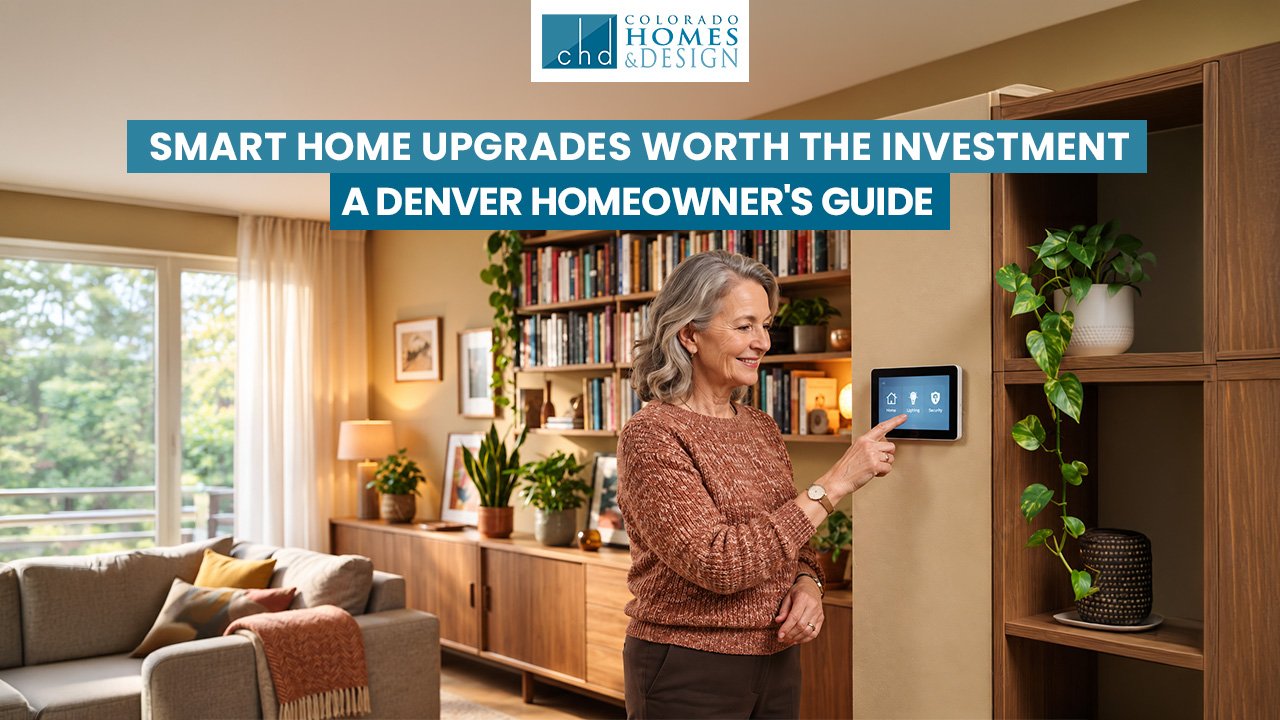
Quick Answer: The smart home upgrades with the best long-term value are whole-home systems that unify lighting, climate, security, and entertainment under one control platform — rather than a collection of disconnected apps. During a remodel is the ideal time to install this wiring and infrastructure, since running low-voltage cable and in-wall components is far easier before walls are closed up.
Walk into any big box store and you’ll find dozens of smart plugs, bulbs, and standalone gadgets, each with its own app. That approach can leave you juggling five apps to turn off your house at night. A true smart home system takes a different approach: one platform that controls everything from your lighting scenes to your thermostat to your security cameras, accessible from a wall panel, phone, or voice command.
What Does a Whole-Home Smart System Actually Control?
A properly designed smart home operating system can typically manage:
- Lighting — scenes, dimming, and schedules across every room
- Climate control — zoned heating and cooling, remote adjustment
- Security — cameras, door locks, and alarm integration
- Audio/video — whole-home audio and centralized media control
- Shades and blinds — automated based on time of day or sun exposure
- Access control — video doorbells, garage doors, and gate entry
The value isn’t any single feature — it’s that all of it lives in one system your whole household can actually use, instead of a patchwork of separate apps that nobody remembers how to operate.
Why Remodel Season Is the Best Time to Add Smart Home Wiring
Retrofitting smart home technology into a finished home is possible, but it’s more limited and often more expensive, since much of it relies on wireless devices with battery constraints or visible retrofit hardware. During a remodel — especially a whole-home renovation, kitchen remodel, or basement finish — walls are already open, which means:
- Low-voltage wiring for lighting, audio, and security can be run exactly where it’s needed, hidden inside the walls
- In-wall keypads and touch panels can be placed at ideal locations rather than wherever an outlet happens to exist
- Structured wiring can be centralized in one location, making future upgrades far simpler
This is why smart home planning should happen at the same time as your kitchen or whole-home design, not as an afterthought once construction is finished.
Smart Home Upgrades Denver Homeowners Ask About Most
Whole-home climate control. Given Colorado’s dramatic swings between hot summer afternoons and cold winter mornings, zoned climate control that adjusts room by room is one of the most practical upgrades for comfort and energy efficiency.
Integrated lighting scenes. A single “movie night” or “good morning” scene can adjust lights, shades, and even temperature with one tap, rather than manually operating each system.
Video doorbells and camera systems tied to one app. Rather than a standalone doorbell app and a separate camera app, an integrated system shows everything in one place.
Automated shades. Especially valuable on south- and west-facing windows common in Denver homes, where afternoon sun can overheat a room quickly.
What to Consider Before Investing
- Start with infrastructure, add devices later. Wiring and a central hub are the foundation. You can add individual smart devices over time without redoing the underlying system.
- Choose an open, expandable platform. A system that can add new devices and integrations over the years protects your investment better than a closed, single-brand ecosystem.
- Think about who uses the system daily. The best smart home setup is one every member of the household can operate without training — not just the most tech-savvy person in the house.
Frequently Asked Questions
Q: Is a smart home system worth the investment? A: For most homeowners, yes — particularly when installed during a remodel, when the wiring infrastructure can be built into the walls rather than retrofitted later. The value comes from convenience, energy efficiency through better climate control, and increasingly, buyer interest in move-in-ready smart homes.
Q: What is the difference between smart home devices and a smart home system? A: Individual smart devices (a smart bulb, a smart plug) each require their own app and operate independently. A smart home system unifies multiple devices and functions — lighting, climate, security, audio — under a single control platform.
Q: Can I add smart home technology to an existing home without a remodel? A: Yes, though options are more limited. Wireless devices and retrofit panels can add many smart features to a finished home, but a remodel allows wiring to be run inside walls for a cleaner, more expandable system.
Q: Does a smart home increase resale value? A: A well-integrated smart home system can be an attractive feature for buyers, particularly younger buyers accustomed to smart technology, though the value is generally seen more in marketability and buyer interest than in a guaranteed dollar-for-dollar return.
Q: What’s the best time to plan smart home upgrades? A: The ideal time is during a kitchen remodel, whole-home renovation, or basement finish, when walls are open and low-voltage wiring can be run before drywall goes back up.
Build Smart Home Technology Into Your Next Remodel
Colorado Homes & Design integrates smart home planning directly into kitchen, bathroom, and whole-home remodels using Control4 Smart Home OS 3, giving you one unified system to control lighting, climate, security, and entertainment.
Explore smart home options or call (303) 500-0450 to talk through what makes sense for your home.